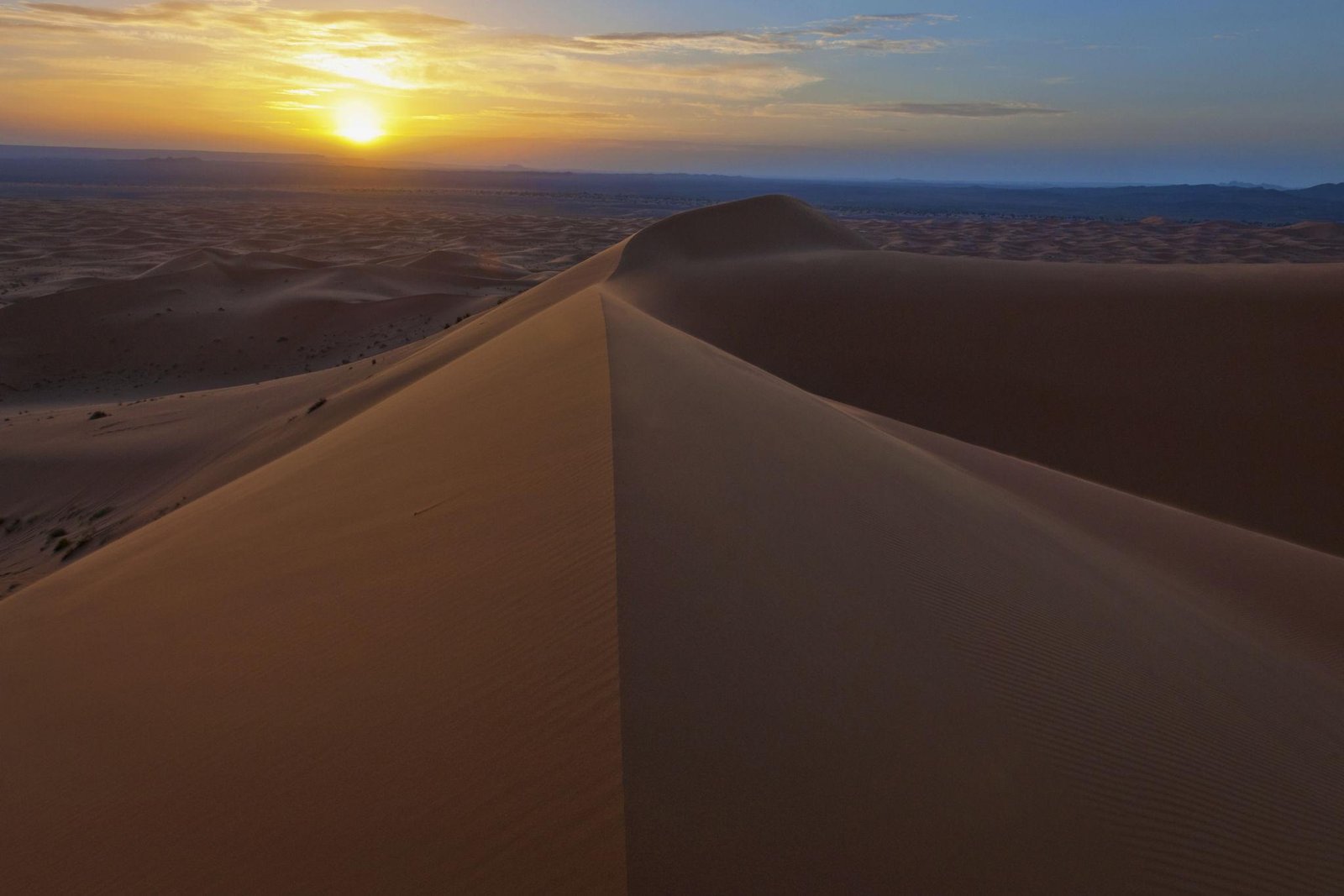
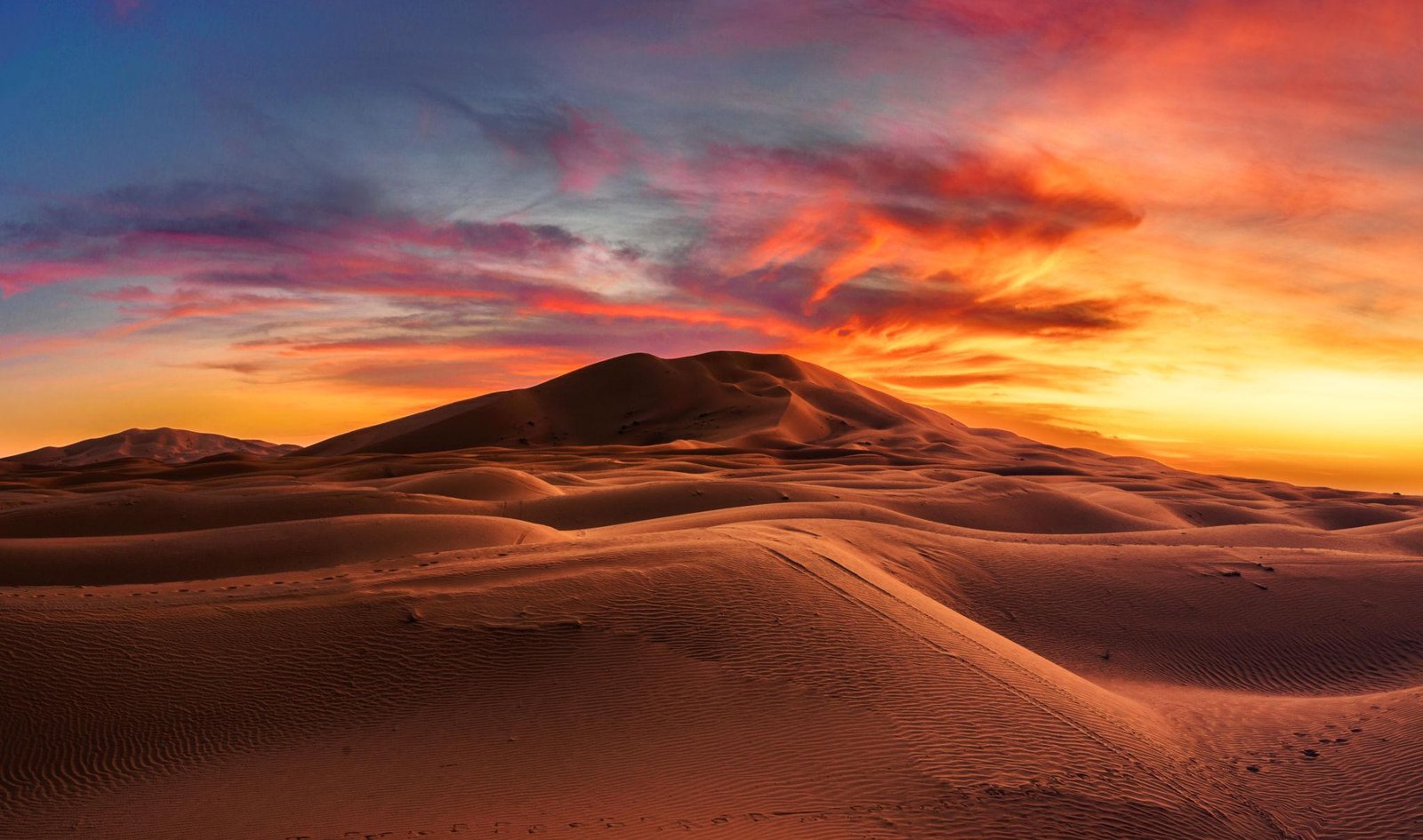
Riding a camel over the dunes at sunset is the image most people have of the Moroccan desert. It is also the moment travellers ask the most questions about: how long is it, is it comfortable, is it safe for kids? Here is what a camel ride in the Sahara in Morocco is really like on our tours.
Camels or dromedaries?
The animals you ride in Morocco are dromedaries, the one-humped camel species adapted to hot deserts. Everyone, including locals, simply calls them camels. They are calm, strong animals, able to walk long distances on soft sand. You can read about the species on Wikipedia's dromedary article.
Each caravan is led on foot by a local cameleer, often from a family that has worked with camels for generations. You do not need any riding experience: the camels walk in a line, tied one behind the other.
How long does a camel ride last?
| Location | Typical ride to camp (approx.) | Best moment |
|---|---|---|
| Merzouga / Erg Chebbi | 1–1.5 h each way | Sunset out, sunrise back |
| Zagora / Draa Valley | 30 min–1 h | Sunset |
| Short "photo" ride | 15–30 min | Any time, often near hotels |
| Multi-day camel trek | Several hours per day | Mild seasons only |
Times are approximate and depend on the camp location and the group's pace.
How to get on and off a camel
- The camel kneels on the sand. Approach from the side, never from behind.
- Swing one leg over the saddle and hold the front handle firmly.
- Lean back: the camel stands up back legs first, which tilts you forward.
- Then it straightens its front legs; now lean slightly forward.
- To get off, do the reverse: lean back as it kneels with its front legs, then hold on as the back follows.
- Wait until the camel is fully down before stepping off.
Those few seconds of standing up and kneeling are the only "tricky" part; the walking itself is slow and rhythmic.
Is a camel ride comfortable?
For most people, yes, for an hour or so. The motion is a gentle sway. After 1–2 hours, some riders feel it in their thighs and lower back. Tips for comfort:
- Wear long, soft trousers to avoid rubbing.
- Keep your back relaxed and move with the camel rather than against it.
- Ask the cameleer to adjust the stirrups or blankets if needed.
- Walk part of the way on the sand if you need a break; the camels go at walking pace.
Sunset or sunrise ride?
On overnight tours you usually get both. The sunset ride takes you from the village to camp, with a stop on a high dune to watch the sand turn orange and red. The sunrise ride brings you back after you have watched the sun appear over the dunes. If you only do one, sunset has the most atmosphere; sunrise has the softest light for photos and the coolest temperatures.
Can children and older travellers ride?
Children often love it. Young children usually ride with a parent or on a calm camel close to the cameleer. Older travellers or those with back or hip problems can ride a shorter section or reach camp by 4x4 instead. Please tell us in advance about mobility issues, pregnancy or any health concerns so we can suggest the right option. If you are unsure whether riding is suitable for you, ask your doctor before the trip.
What about animal welfare?
Responsible travellers rightly ask about this. Good practices to look for:
- Camels that look healthy, with no visible wounds from saddles.
- Rest and shade between rides, and access to water and food.
- Reasonable loads: riders only, with luggage left in the vehicle.
- Cameleers walking calmly with the animals, not hurrying them.
If something looks wrong during your ride, tell your guide. Leaving the heavy luggage in the vehicle and bringing only a small bag, as explained in our desert packing list, also helps the animals.
What to wear and bring on the ride
- Long trousers, long sleeves and a scarf or cheche against sun and sand.
- Sunglasses; wind can lift fine sand.
- A small backpack worn on your back, not hanging from the saddle.
- Phone or camera on a strap; dropping it in the sand from a camel is common.
- A warm layer for the sunrise ride in winter and spring.
Camel ride by season
The time of year changes the experience. In spring and autumn, rides at sunset and sunrise are pleasant in a light layer. In summer, rides start late in the afternoon to avoid the heat, and the sand stays warm well into the evening. In winter, the sunset ride is beautiful but cools quickly; dress warmly for the sunrise ride back, when temperatures can be close to freezing. Wind is more frequent in spring, so keep a scarf ready to cover your face. Whatever the season, the camels walk at the same calm pace.
Short ride or multi-day camel trek?
Most visitors ride only to and from camp, which is enough to feel the rhythm of the caravan. Some travellers want more: a full day or several days of trekking with camels carrying the equipment while you walk part of the way. Multi-day treks are best in the mild months, require a good level of fitness and are organised on request. If that interests you, describe your plans on our custom tours page and we will advise on what is realistic for your dates.
Where to do a camel ride in Morocco
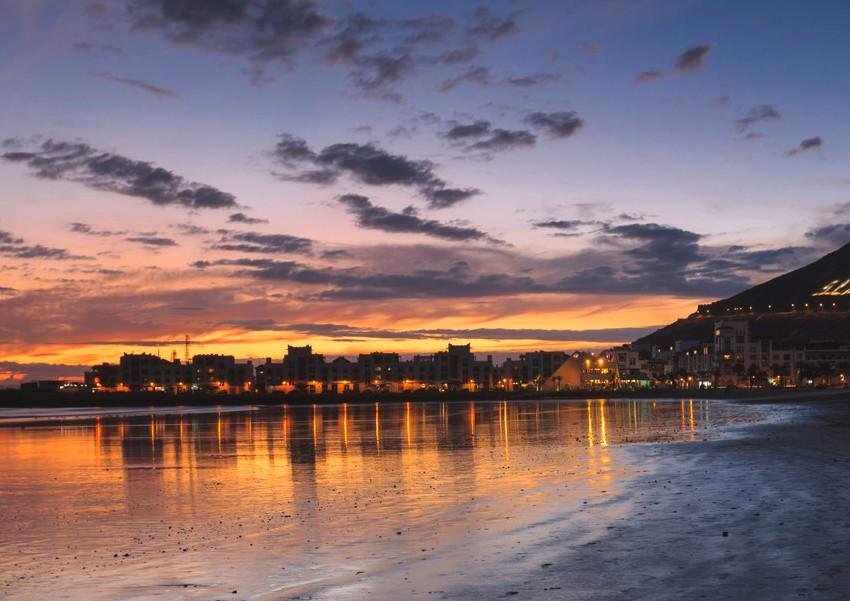
The two main areas are Merzouga, with the tall dunes of Erg Chebbi, and Zagora in the Draa Valley. Both are included in our tours: the 3-day Merzouga desert tour, the 4-day tour with 2 nights in Merzouga, and the shorter 2-day Zagora trip with a sunset camel ride. Travellers starting on the coast can join from Agadir; see our Agadir desert tours.
Key takeaways
- Expect 1–1.5 hours each way in Merzouga, shorter in Zagora.
- Lean back when the camel stands and kneels.
- Wear long trousers and keep luggage light.
- Walking or a 4x4 transfer are always possible alternatives.
- Choose between the big dunes and the shorter trip with our Merzouga vs Zagora guide.