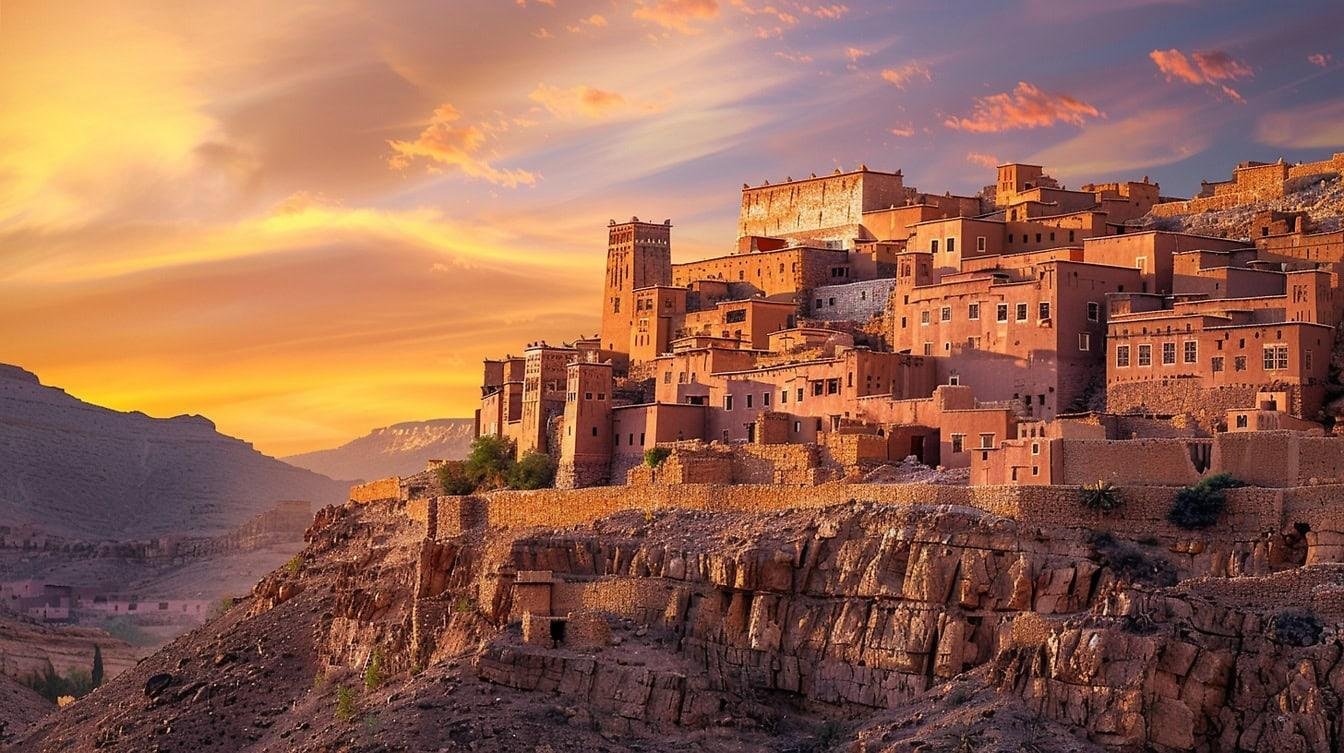
Red earth walls, towers with carved patterns and a hill crowned by an old granary: Ait Ben Haddou is one of the most photographed places in Morocco. Almost every Sahara tour from Marrakech stops here, and for good reason.
This guide explains what the ksar is, why it matters, how long to stay, and how to make the most of your visit on the way to Zagora or Merzouga.
What is Ait Ben Haddou?
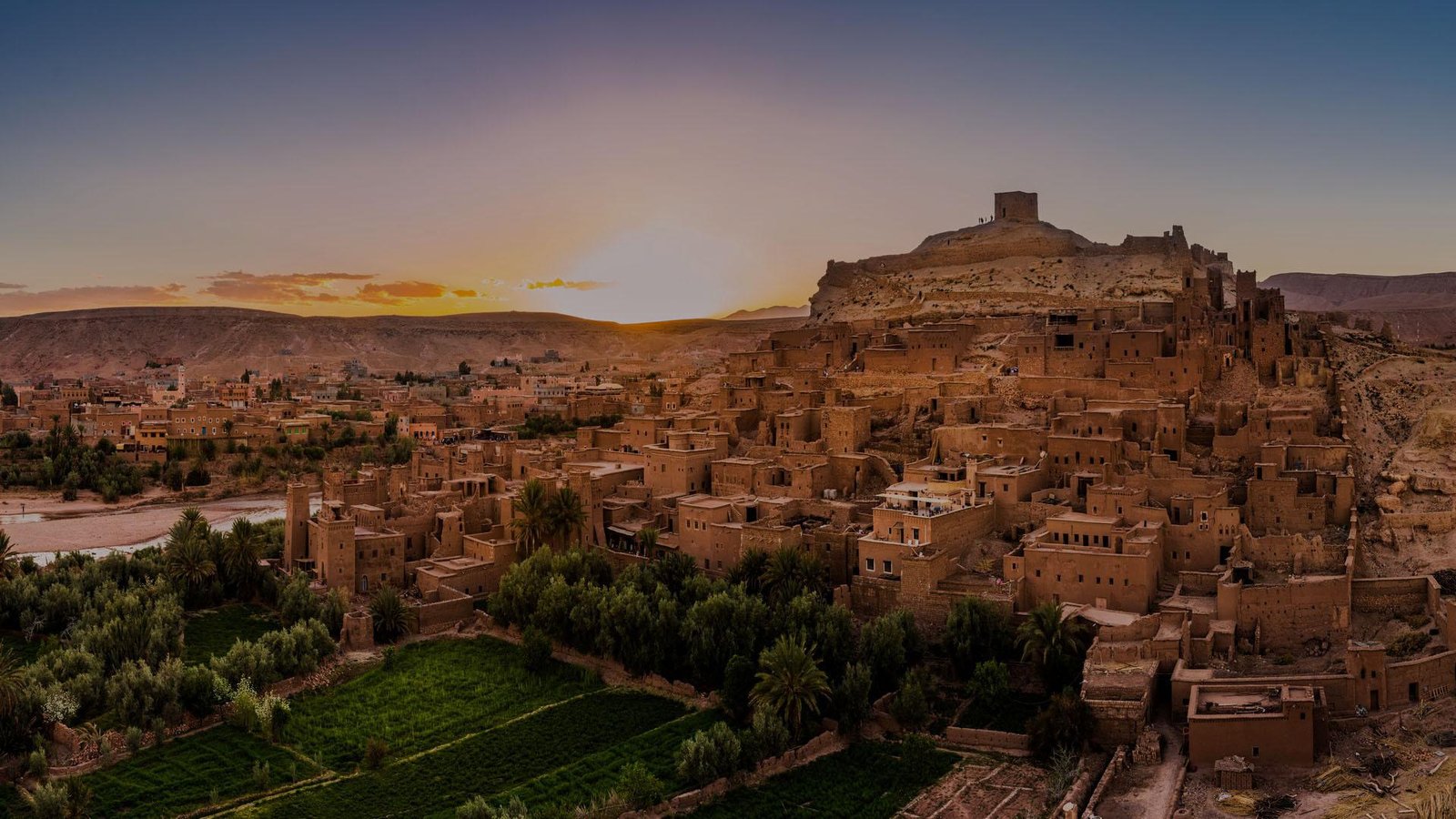
Ait Ben Haddou is a ksar, a group of earthen buildings protected by defensive walls, built on a hillside above the Ounila river. It stood on the old caravan route that linked the Sahara with Marrakech across the High Atlas. Its houses, towers and collective granary are built from rammed earth and mud brick, a technique typical of southern Morocco. UNESCO lists it as a World Heritage Site; you can read the official description on the UNESCO World Heritage page for Ksar of Ait-Ben-Haddou.
Today only a few families still live inside the old ksar. Most residents moved to the newer village across the river, but the old houses remain open to visitors, with small shops, galleries and terraces.
Where is Ait Ben Haddou and how far is it from Marrakech?
| From | Distance (approx.) | Driving time (approx.) |
|---|---|---|
| Marrakech (via Tizi n'Tichka) | 190 km | 3.5–4 h |
| Ouarzazate | 30 km | 30 min |
| Zagora | 190 km | 3–3.5 h |
| Merzouga | 380 km | 6–7 h |
Times are approximate and depend on traffic and weather on the mountain pass.
Why is Ait Ben Haddou famous?
- Architecture: one of the best-preserved examples of earthen architecture in southern Morocco.
- History: a strategic stop on the trans-Saharan caravan route.
- Cinema: the ksar and its surroundings have appeared in many international films and series, including Gladiator and Lawrence of Arabia, which is why nearby Ouarzazate is nicknamed the "Hollywood of Africa".
- Landscape: the contrast of red walls, green riverbanks and the High Atlas behind.
How to visit Ait Ben Haddou: step by step
- Arrive at the new village, where vehicles park and cafés line the road.
- Cross the Ounila river on the footbridge (or on stepping stones when the water is low).
- Enter through the lower gate and walk up the narrow lanes between houses.
- Visit a traditional house; some families invite visitors in for a small fee or tea.
- Climb to the granary (agadir) at the top for the panoramic view of the valley.
- Come down by the other side and return across the river for lunch.
The walk takes about 45 minutes to 1 hour at an easy pace. The path to the top is uneven with steps, so wear comfortable shoes.
When is the best time to visit?
Light changes everything here. Early morning and late afternoon give the warm, golden colour that makes the earthen walls glow. Midday is hotter and busier, as most tours from Marrakech arrive around lunchtime. If you are on a private tour, ask your driver to plan the stop for the morning on the way back or late afternoon on the way out. In summer, avoid the midday climb; in winter, the High Atlas may have snow in the background, which makes for spectacular photos.
Ait Ben Haddou on a desert tour
You rarely visit Ait Ben Haddou alone. It is the first major stop on every route from Marrakech to the Sahara:
- On our 2-day Zagora desert tour, it comes after the Tichka pass on day one, before the Draa Valley.
- On the 3-day Merzouga tour, it is the late-morning stop before Ouarzazate and the Dades Valley.
- On a 4-day Zagora and Merzouga loop, you see it once and then continue through both desert areas without retracing your steps.
To compare these routes, read our guide to the Marrakech to Merzouga distance or Merzouga vs Zagora.
Nearby places worth adding
| Place | Why go | Time needed |
|---|---|---|
| Telouet Kasbah | Former Glaoui palace with painted rooms, on an old mountain road | 1–2 h detour |
| Ounila Valley | Quiet villages, terraces and kasbahs between Telouet and Ait Ben Haddou | Scenic drive |
| Ouarzazate | Taourirt Kasbah and the Atlas film studios | 1–2 h |
| Tamdaght | Small kasbah village just north of the ksar | 30 min |
Practical tips for visiting
- Entrance: walking through the ksar is generally free; some houses charge a small fee to enter. Bring small change in dirhams.
- Local guides: you may be offered a guide at the entrance. A short guided walk can add context, but agree on the price first.
- Shopping: paintings made with tea and saffron, rugs and jewellery are common. Bargaining is normal and friendly.
- Respect: people still live here; ask before photographing residents.
- Water and sun: there is little shade on the climb; bring water and a hat.
How earthen architecture works
The buildings of Ait Ben Haddou are made of pisé (rammed earth), mud bricks, straw, stone foundations and palm or reed beams for the ceilings. This technique keeps interiors cool in summer and warmer in winter, which is why it spread across the oases of southern Morocco. The downside is fragility: heavy rain slowly erodes the walls, so earthen villages need regular maintenance. When houses are abandoned, they crumble within a few decades. Restoration work at Ait Ben Haddou has helped keep the ksar standing, and part of what you pay in small fees or purchases supports the families who maintain it.
Look out for the decorative patterns on the upper parts of the towers, made by placing bricks in geometric designs. Similar motifs appear on kasbahs in the Dades Valley and Skoura, so once you notice them you will see them all along the road to the desert.
Photography tips
- The classic view is from the riverbank in front of the ksar, especially in late afternoon light.
- From the granary at the top, you see the whole Ounila Valley and the snow-capped High Atlas in winter.
- Arrive early to photograph the lanes without crowds.
- Ask before photographing people and respect a "no".
Can you stay overnight at Ait Ben Haddou?
Yes. There are guesthouses and small hotels in the new village and around the valley, some with views of the ksar. Sleeping here lets you see it at sunrise, before the day-trip crowds. This is easy to arrange on a custom private tour, for example as the first night of a slower trip to the desert.
Key takeaways
- Ait Ben Haddou is a UNESCO-listed ksar about 190 km from Marrakech.
- Allow about one hour for the visit; wear good shoes.
- Morning and late afternoon light are best for photos.
- It is included on all our routes from Marrakech to the desert; see our Marrakech desert tours.